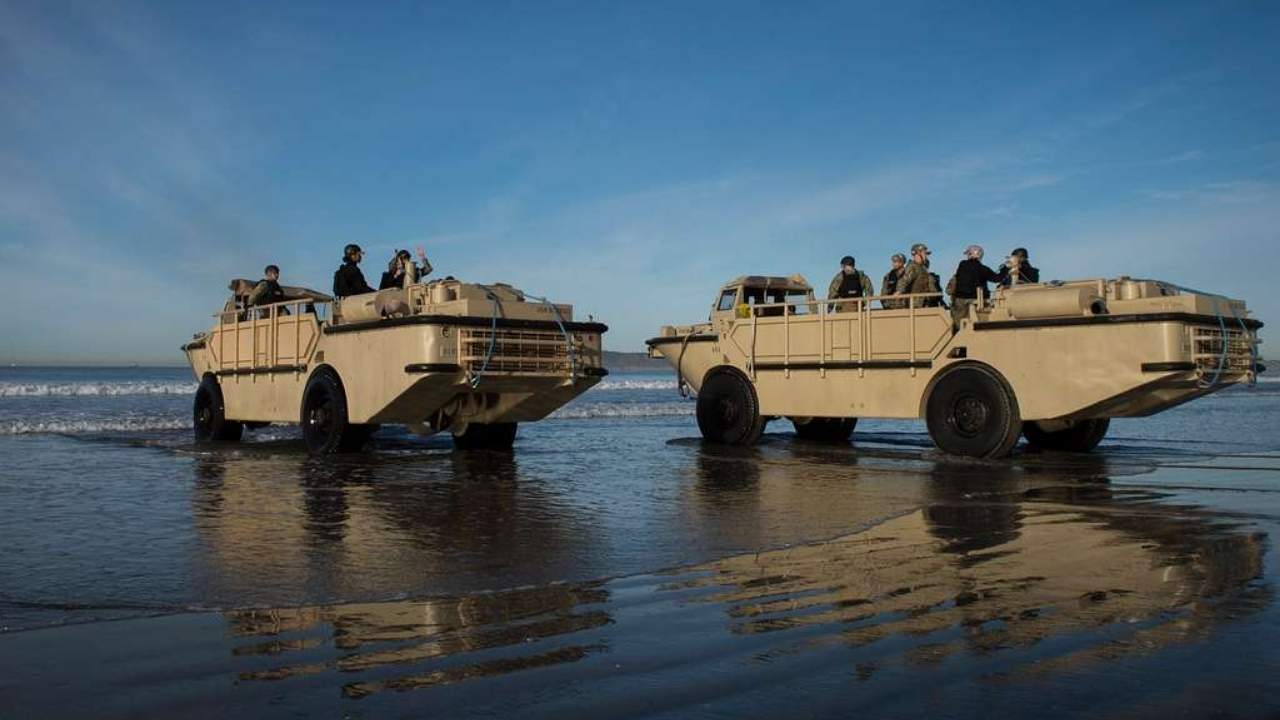
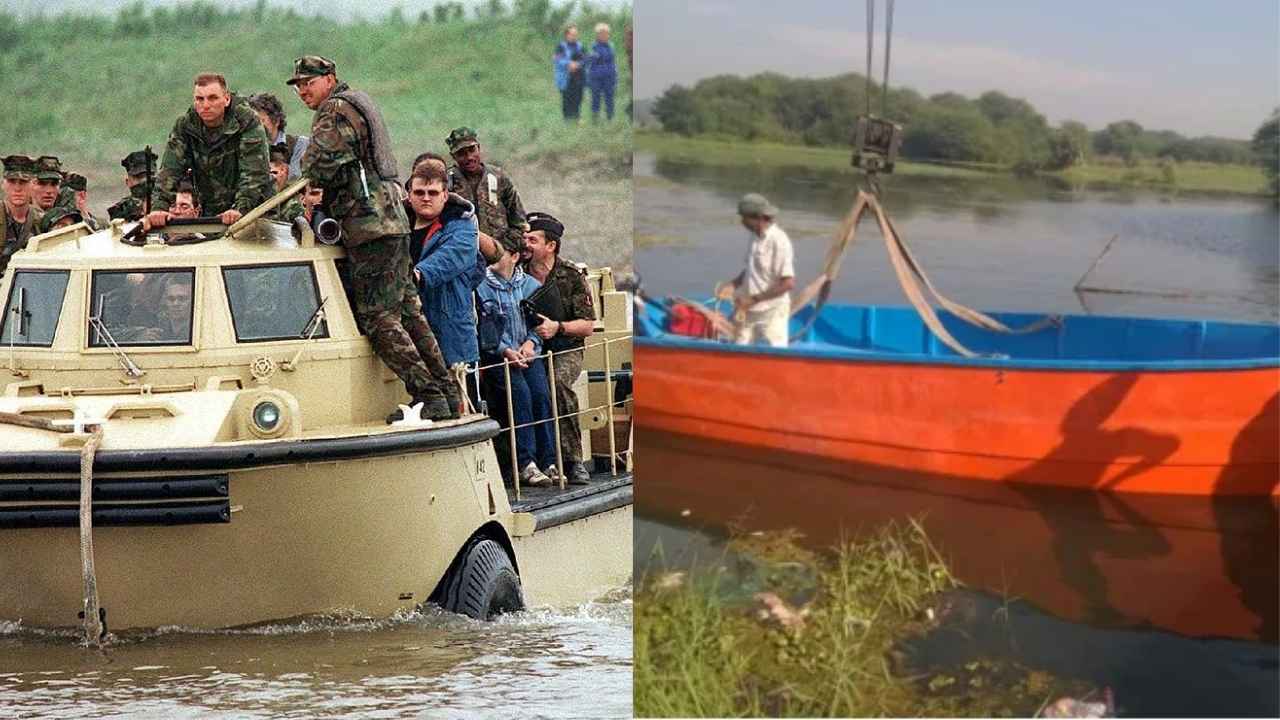
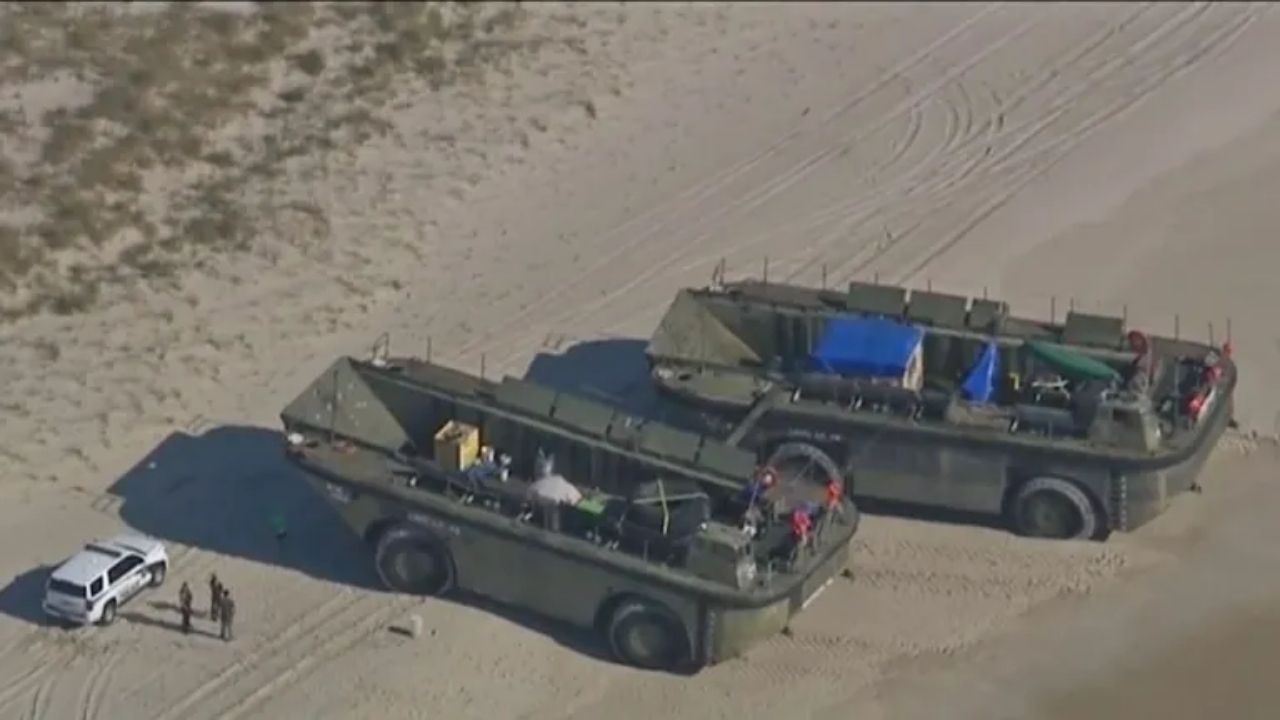
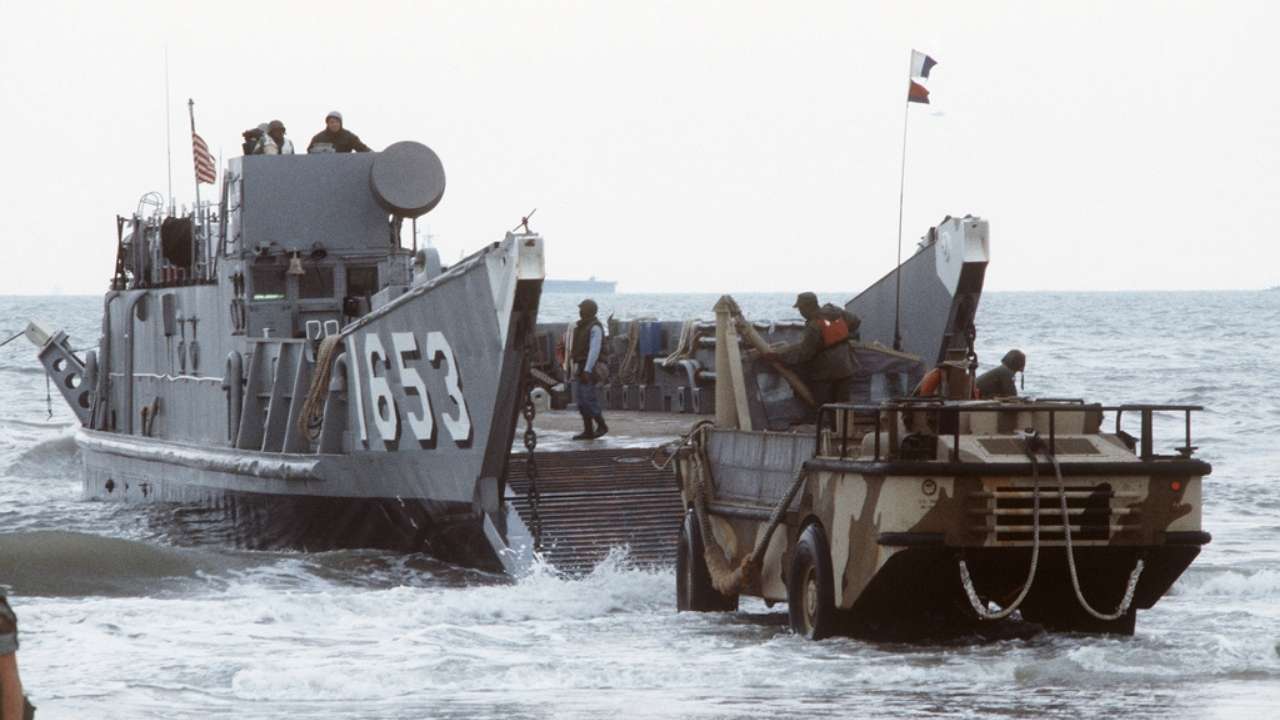
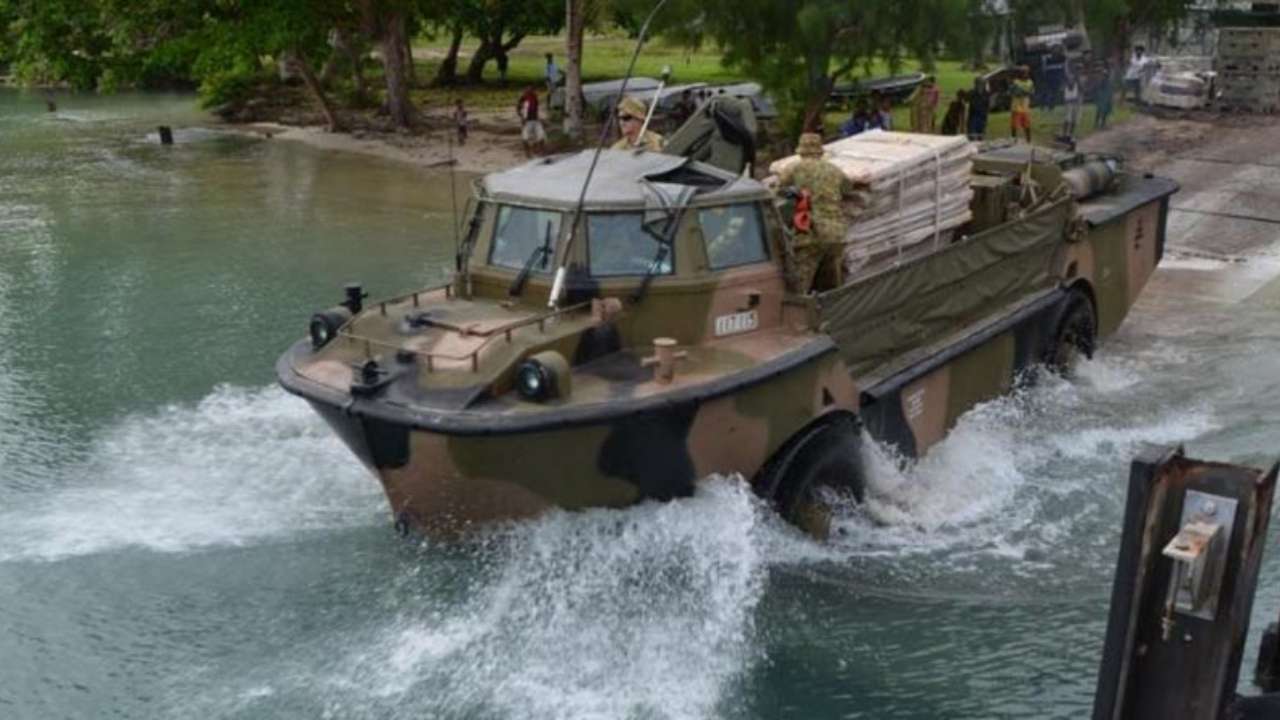
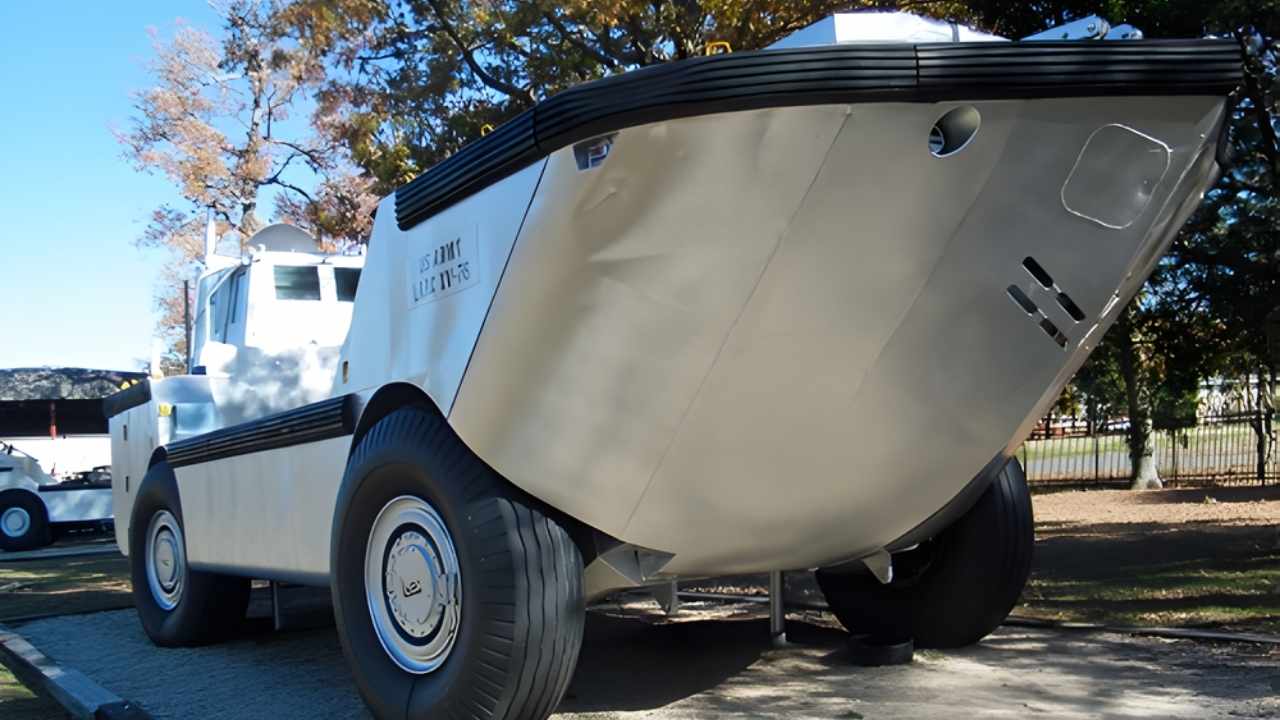
The LARC and modern amphibious SUVs both have the rare ability to move from land into water, yet that similarity hides a deep difference in purpose, mindset, and expectations behind their designs.
While the LARC was created for military survival and logistics under pressure, amphibious SUVs were shaped by civilian needs where comfort, control, and personal enjoyment matter just as much as reaching the water.
Both vehicles “swim,” but the LARC swims because soldiers needed supplies on hostile shores, whereas amphibious SUVs swim because people want freedom, adventure, and convenience without leaving familiar road vehicles behind.
Looking at these machines together helps explain how military thinking and civilian thinking lead to completely different choices, even when the end result appears similar from a distance.

LARC vs Amphibious SUVs
The LARC and modern amphibious vehicles address the same challenge of crossing land and water, yet the LARC answers it through military necessity, while civilian designs respond to personal mobility, choice, and controlled access.
Both exist because movement should not stop at shorelines, but the LARC was shaped by pressure and logistics, whereas modern amphibious vehicles were shaped by lifestyle, safety expectations, and everyday usability.
Entering, Moving Through, & Leaving Water
The LARC moves straight into water with confidence because unstable shorelines are expected, while amphibious SUVs approach water gently, reflecting civilian environments where controlled entry, balance, and personal safety matter more than speed.

Size, Weight, & Carrying Purpose
The LARC carries its size and weight as a necessity for hauling military loads, whereas amphibious SUVs stay compact so passengers, fuel use, and legal road driving remain practical and manageable.
| Feature | LARC | Amphibious SUVs |
|---|---|---|
| Size | Oversized | Small and compact |
| Weight Focus | Load capacity | Passenger balance |
| Main Role | Transport supplies | Move people |
LARC Strength vs SUV Comfort Design
The LARC is shaped around toughness and repair simplicity, while amphibious SUVs are shaped around comfort and smooth operation, revealing how military machines accept discomfort and civilian vehicles avoid it.
- Design Philosophy Differences –
- LARC values survival over comfort.
- Amphibious SUVs value balance and ease.
- Military design prepares for failure.
- Civilian design assumes reliability.
Speed Vs Maneuverability Differences
Because the LARC prioritizes stability over agility, it moves slowly and turns wide, while amphibious SUVs respond faster and steer easier to match everyday driving expectations.

| Speed & Handling | LARC | Amphibious SUVs |
|---|---|---|
| Water Movement | Steady, slow | Controlled, quicker |
| Turning Radius | Wide | Narrow |
| Control Feel | Heavy and deliberate | Familiar and light |
Where Each Vehicle Is Normally Used
The LARC is most effective on exposed beaches and undeveloped coastlines, while amphibious SUVs operate best in calm waters like lakes or rivers designed for recreational use.
Crew, Controls, & Training Differences
LARC operation depends on trained crews working together, while amphibious SUVs are designed so regular drivers can operate them comfortably without specialized instruction.
- Crew & Operation Differences –
- LARC relies on trained personnel
- Amphibious SUVs suit everyday users
- Military controls demand coordination
- Civilian controls feel instinctive
Strengths & Limits
Military-focused engineering gives the LARC unmatched hauling reliability but little flexibility, while civilian-focused design gives amphibious SUVs comfort and adaptability while limiting extreme performance.

Maintenance & Ownership Reality
Maintaining a LARC focuses on keeping it operational under harsh conditions, while owning an amphibious SUV emphasizes routine service, ease of care, and minimal interruption to personal use.
Risk Tolerance & Design Limits
The LARC accepts rough treatment because military missions leave little room for hesitation, while amphibious SUVs limit exposure because civilian safety standards demand predictability and caution.
Understanding the Different Approaches
Placing the LARC beside amphibious SUVs shows how purpose shapes design, proving that military urgency and civilian lifestyle lead to entirely different solutions for crossing land and water.