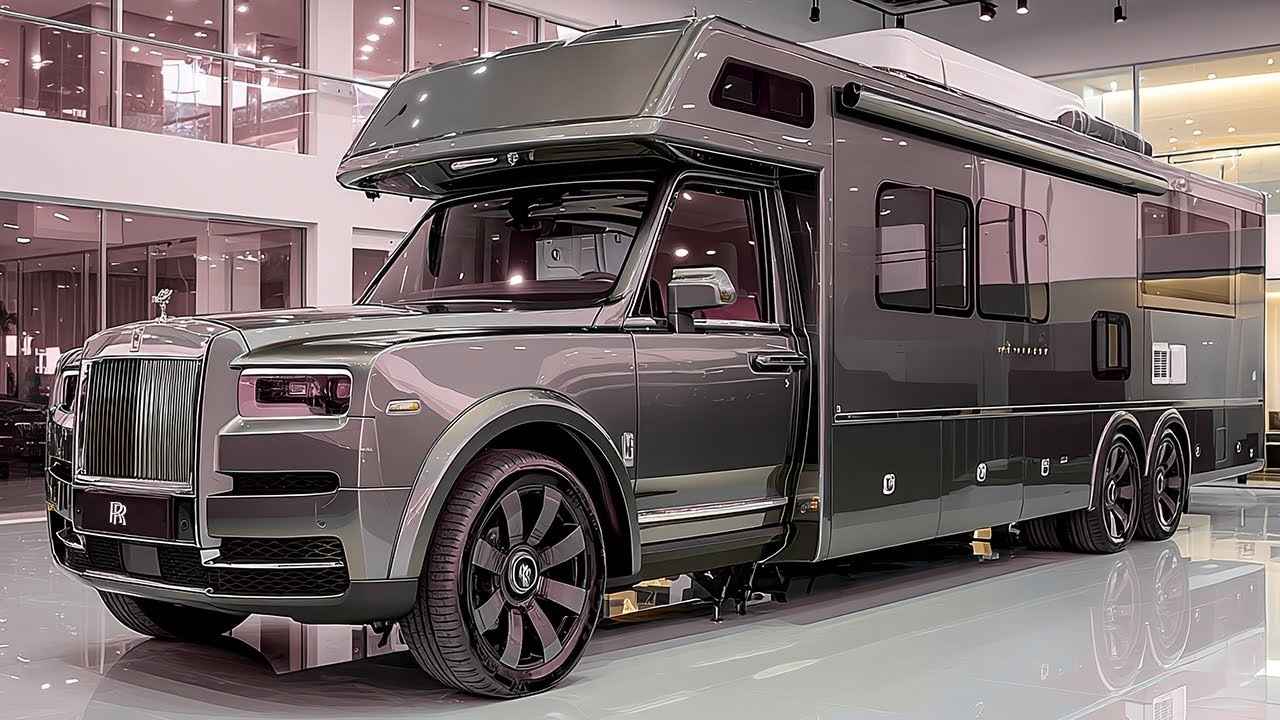
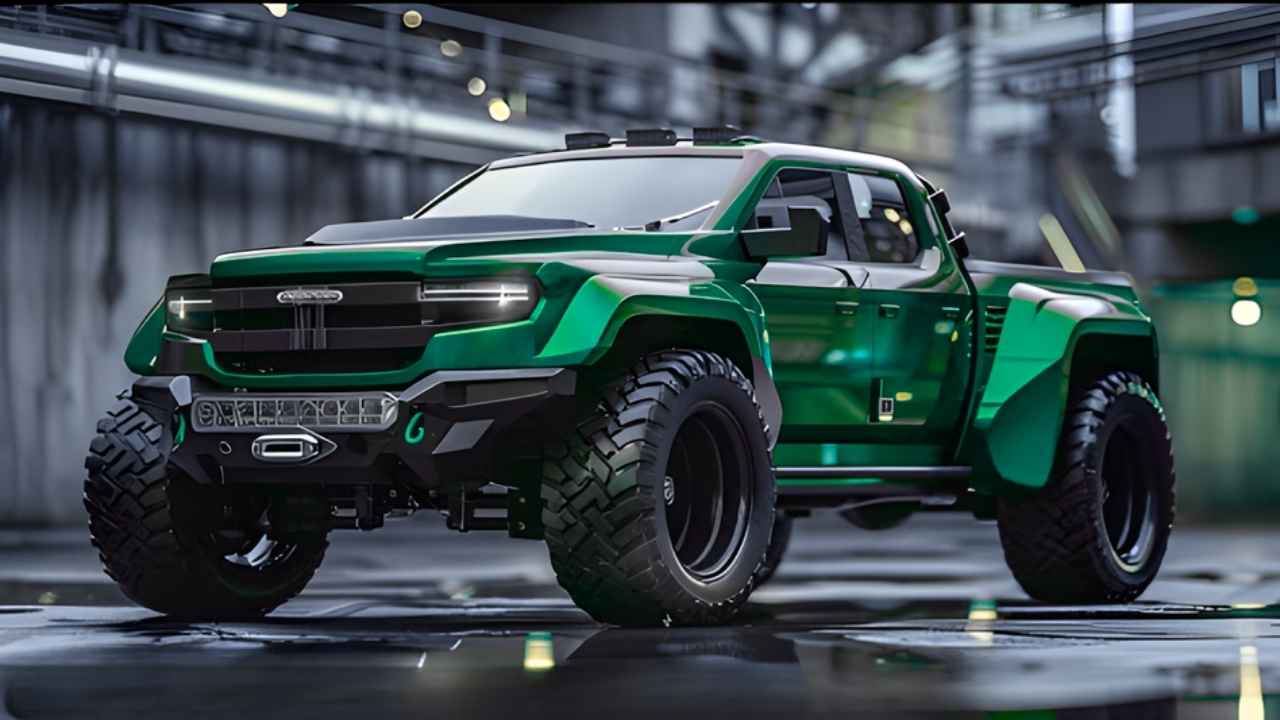
Most Class C and Class A motorhomes engineered to maintain highways and serviced campgrounds, using frames, suspensions, and drivetrains optimized for comfort rather than sustained stress from uneven terrain and continuous heavy loads.
Their two-axle layouts concentrate mass at the rear, overloading axles and suspensions when fully equipped, while long rear overhangs reduce departure angles and cause frequent ground strikes on ruts, washouts, and uneven tracks.
Mechanical systems such as tanks, exhausts, and driveline components are often exposed beneath the floor, making them vulnerable to damage long before habitation systems are challenged by extended off-grid use.
These limitations are structural rather than cosmetic, explaining why conventional motorhomes retreat from remote routes where purpose-built overland platforms continue operating reliably.
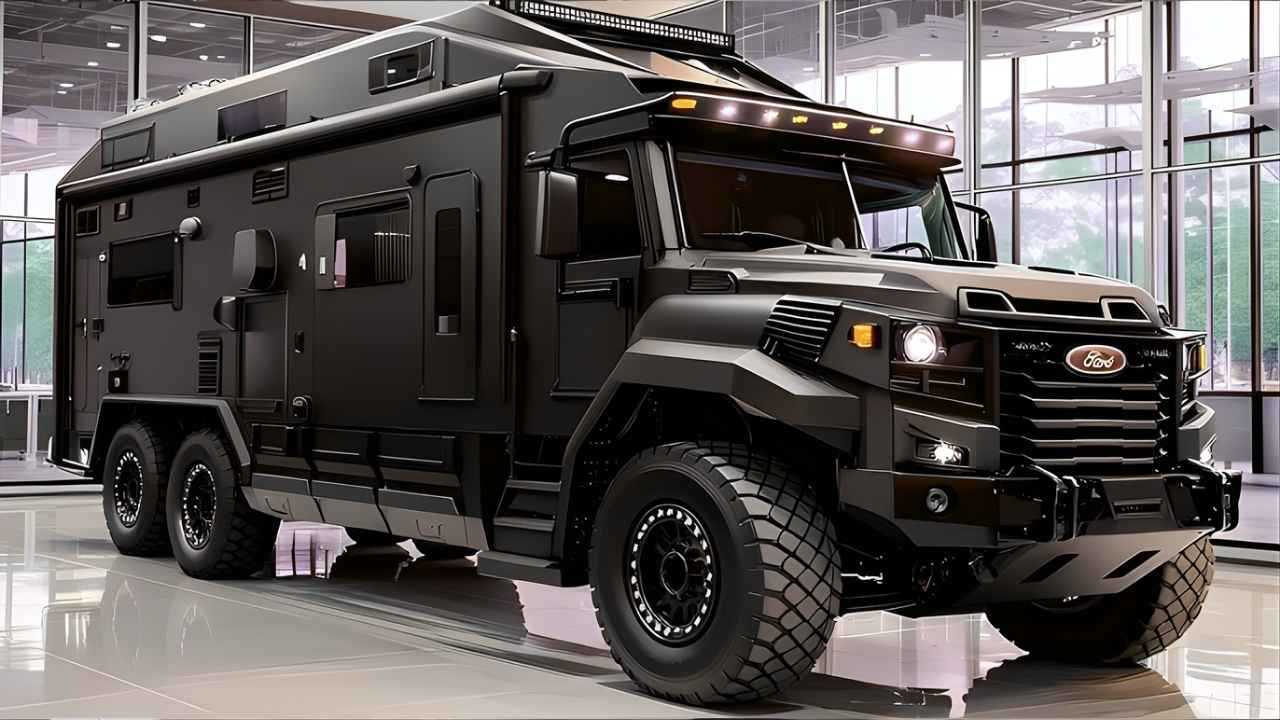
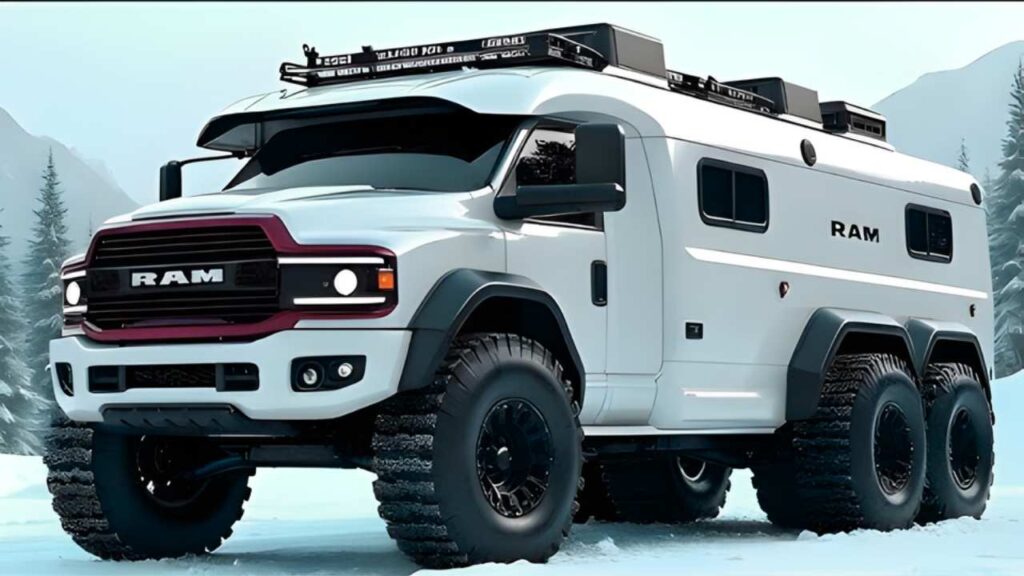
2026 Ram 5500 6×6 Overland Motorhome
The Ram 5500 chassis cab is design for industrial duty cycles, featuring a reinforced steel ladder frame, high-capacity axles, and driveline components intended to operate under continuous maximum load conditions.
Adding a six-wheel-drive configuration fundamentally changes how weight, traction, and driveline forces are managed, allowing the vehicle to remain stable and mobile while carrying substantial water, fuel, equipment, and living mass.
Unlike recreational platforms adapted upward, the Ram 5500 begins with margins suitable for utilities, recovery fleets, and heavy transport, making it an appropriate base for long-range expedition motorhome conversions.
The resulting vehicle prioritizes mechanical endurance and predictable mobility rather than interior luxury or campground convenience.
Exterior Construction and Expedition Hardware
External components are selected for durability and repairability, prioritizing structural protection over visual refinement. Typical expedition equipment includes –
- Steel front and rear bumpers with rated recovery points.
- Full underbody protection for drivetrain and tanks.
- Heavy-duty winch systems matched to vehicle mass.
- 41–43 inch all-terrain or mud-terrain tires on reinforced wheels.
These features reduce dependency on recovery support in isolated regions.
Chassis, Frame, & Logic Behind Six Driven Wheels
At its core, the Ram 5500 uses a boxed ladder-frame chassis design to resist torsional twist while maintaining alignment between drivetrain components under uneven loading. A typical 6×6 conversion adds a second powered rear axle, connect through a load-equalizing suspension system that spreads weight across three contact points instead of two.
- Common Structural Adaptations Include –
- Reinforced rear frame sections for habitation mounting
- Balanced load paths between tandem rear axles
- Retention of factory crossmembers for rigidity
This arrangement lowers per-axle stress and improves traction consistency across loose or deformable surfaces.
Drivetrain Architecture & Low-Speed Control
For heavy expedition vehicles, controlled movement at low speed matters more than acceleration, placing emphasis on gearing, torque multiplication, and differential management.
| Driveline Element | Typical Configuration |
|---|---|
| Drive system | Selectable or permanent 6×6 |
| Transfer case | Heavy-duty unit with low range |
| Low-range ratio | Approximately 2.5:1 to 2.7:1 |
| Differential control | Lockable front, center, and rear |
This setup allows steady progress on climbs, controlled descents, and precise maneuvering without excessive drivetrain or brake wear.
Diesel Powertrain and Torque-First Tuning
Most Ram 5500 expedition builds rely on a large-displacement inline-six turbo-diesel, selected for durability, cooling capacity, and consistent torque delivery at low engine speeds. Commonly referenced specifications includes –

- Displacement near 6.7 litres.
- Output around 360 – 400 horsepower.
- Torque roughly 1,100 – 1,250 Nm.
- Heavy-duty six-speed automatic transmission.
The emphasis is on sustained pulling power, engine braking, and long service intervals rather than outright speed.
Suspension, Axles, & Load-Bearing Reality
Suspension systems are engineered to support constant mass rather than absorb occasional impacts, maintaining stability with full tanks, equipment, and habitation systems onboard.
| Parameter | Estimated Range |
|---|---|
| Gross vehicle weight rating | 10,900 – 12,300 kg / 24,000 – 27,000 lb |
| Front axle capacity | About 3,600 kg / 8,000 lb |
| Rear axle capacity (each) | About 3,800 kg / 8,400 lb |
| Suspension design | Heavy-duty leaf or hybrid |
Proper load distribution across three axles preserves braking balance and directional control during extended off-road travel.
Living Module Design & Interior Zoning
The habitation module is usually a rigid composite structure mounted to accommodate chassis movement while protecting interior systems from frame flex.
- Interior layouts commonly provide –
- Sleeping space for two to four occupants.
- Compact kitchen with diesel or electric cooking.
- Enclosed bathroom using cassette or fixed waste systems.
Space planning focuses on functionality, equipment access, and balanced weight distribution rather than residential proportions.
Heating, Cooling, & Climate Control Off-Grid
Expedition travel exposes vehicles to extreme temperature ranges, requiring efficient thermal management without reliance on external power.
| Climate System | Typical Solution |
|---|---|
| Heating | Diesel air or hydronic heater |
| Cooling | High-efficiency roof or split air-conditioning |
| Insulation | Multi-layer composite wall construction |
| Thermal performance | Estimated R-7 to R-10 equivalent |
Such systems support year-round habitation while limiting electrical and fuel consumption.

Electrical System & Energy Independence
Electrical architecture is designed around redundancy and autonomy, enabling long stationary periods without generator reliance. Common system elements are –
- Lithium battery storage around 20 – 30 kWh
- Roof-mounted solar arrays producing 1,200 – 2,000 watts
- Diesel generator rated approximately 6 – 8 kW
This setup supports refrigeration, communications, lighting, and climate control during extended off-grid deployments.
Water Storage, Filtration, & Waste Systems
Water systems are scaled for long-distance travel without frequent resupply, reflecting expedition rather than recreational usage patterns.
| System | Estimated Capacity |
|---|---|
| Fresh water | 400 – 600 litres / 105 – 160 gal |
| Grey water | 250 – 350 litres / 66 – 92 gal |
| Black water | 150 – 200 litres / 40 – 53 gal |
| Filtration | Multi-stage with ceramic or UV treatment |
These capacities enable multi-week operation in remote or arid environments.
Navigation, Driver Assistance, and Visibility
Driver support systems prioritize situational awareness and risk reduction rather than automated driving convenience. Commonly integrated tools includes –
- Multi-angle camera systems, including underbody views
- Off-road navigation with topographic mapping
- Satellite communication and emergency signaling
- Long-range radio for convoy coordination
These systems enhance safety when operating far from assistance.
Fuel Capacity, Range, & Expedition Planning
Fuel storage defines operational reach, particularly in regions with limited diesel availability.

| Metric | Typical Estimate |
|---|---|
| Fuel capacity | 300 – 400 litres / 79 – 106 gal |
| Average consumption | 35 – 45 L/100 km under load |
| Practical range | 700 – 1,000 km / 435 -620 mi |
Such margins allow flexible routing without compromising operational security.
Who a Vehicle Like This Is Actually Built For
A Ram 5500 6×6 overland motorhome serves users whose work or exploration regularly extends beyond maintained roads, where mechanical failure carries serious logistical or safety consequences.
Typical operators include scientific research teams, geological survey crews, disaster response units, and expedition support groups requiring mobile shelter, power, and communications in infrastructure-poor regions.
Remote professionals such as filmmakers, engineers, and humanitarian workers value the platform’s ability to combine transport, workspace, and habitation within a single self-reliant vehicle.
For these users, capability, durability, and autonomy matter far more than luxury finishes or recreational amenities.