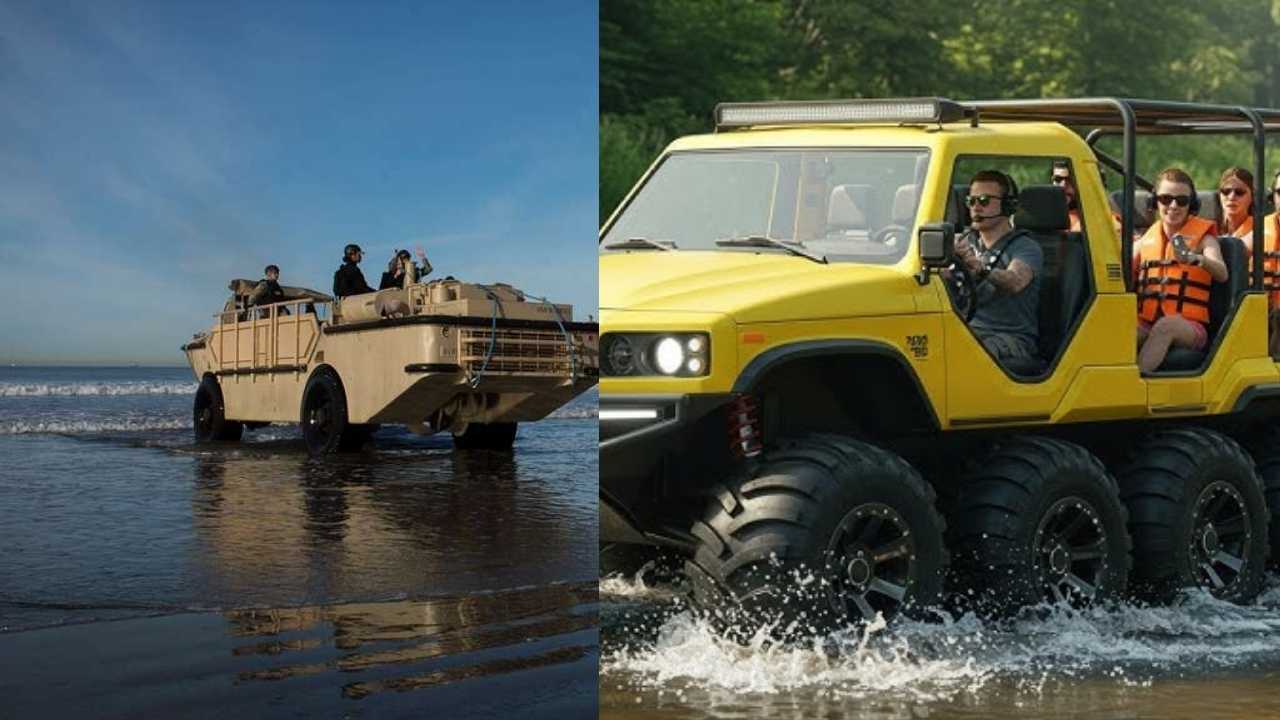
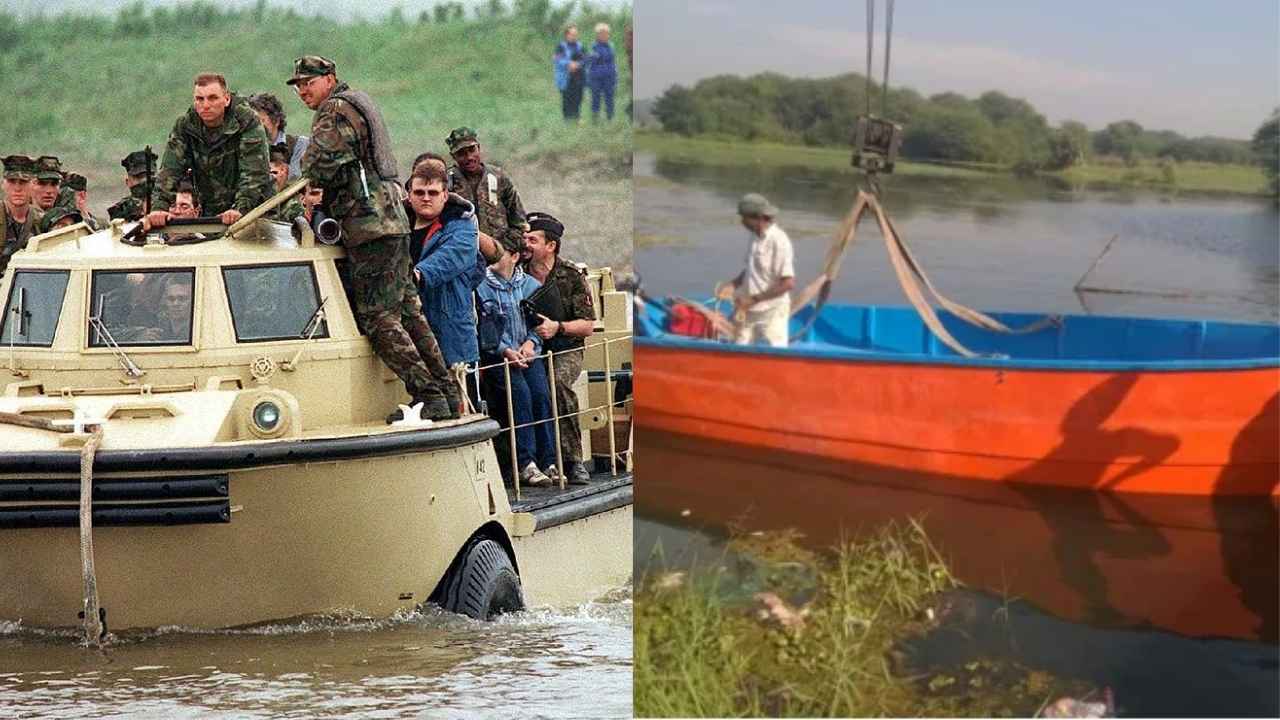
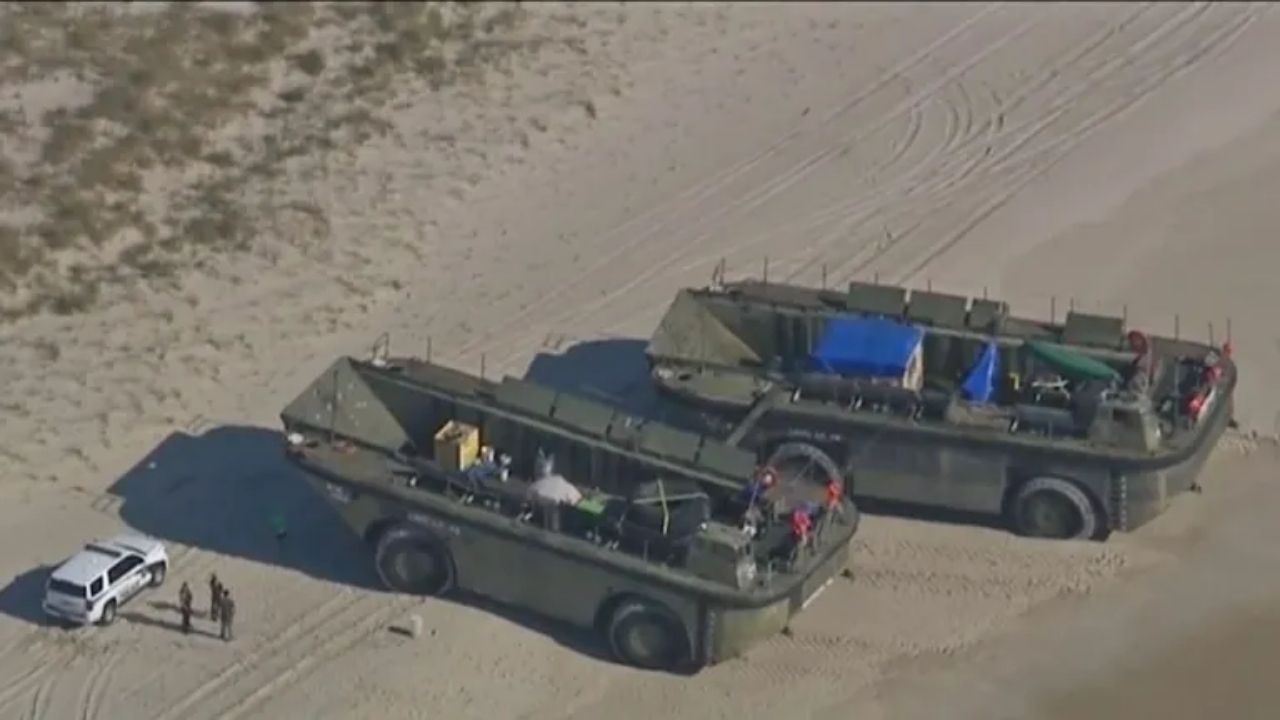
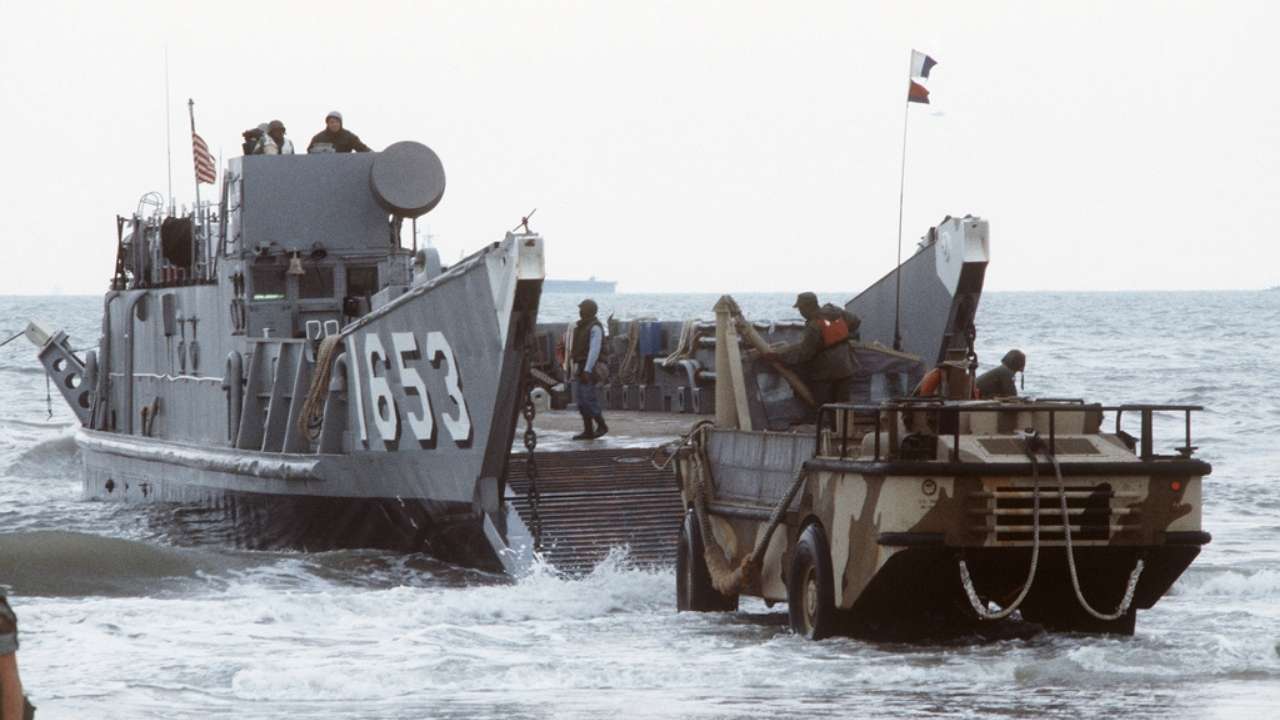
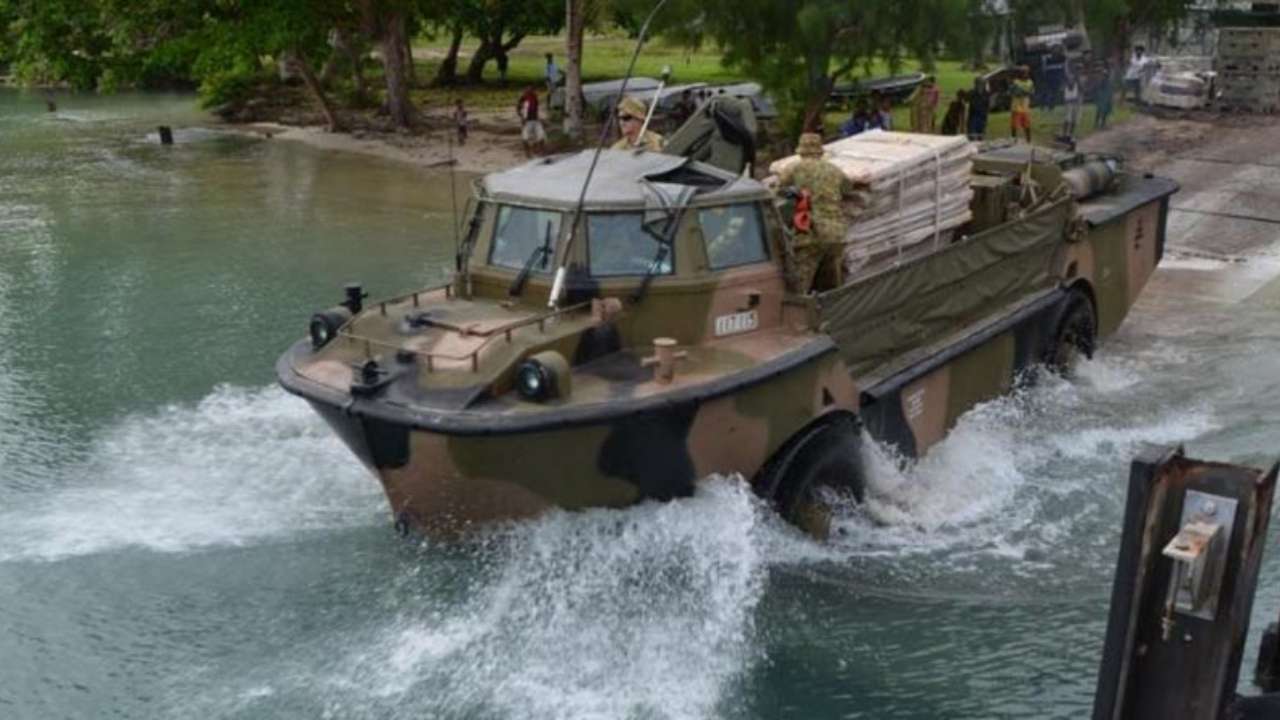
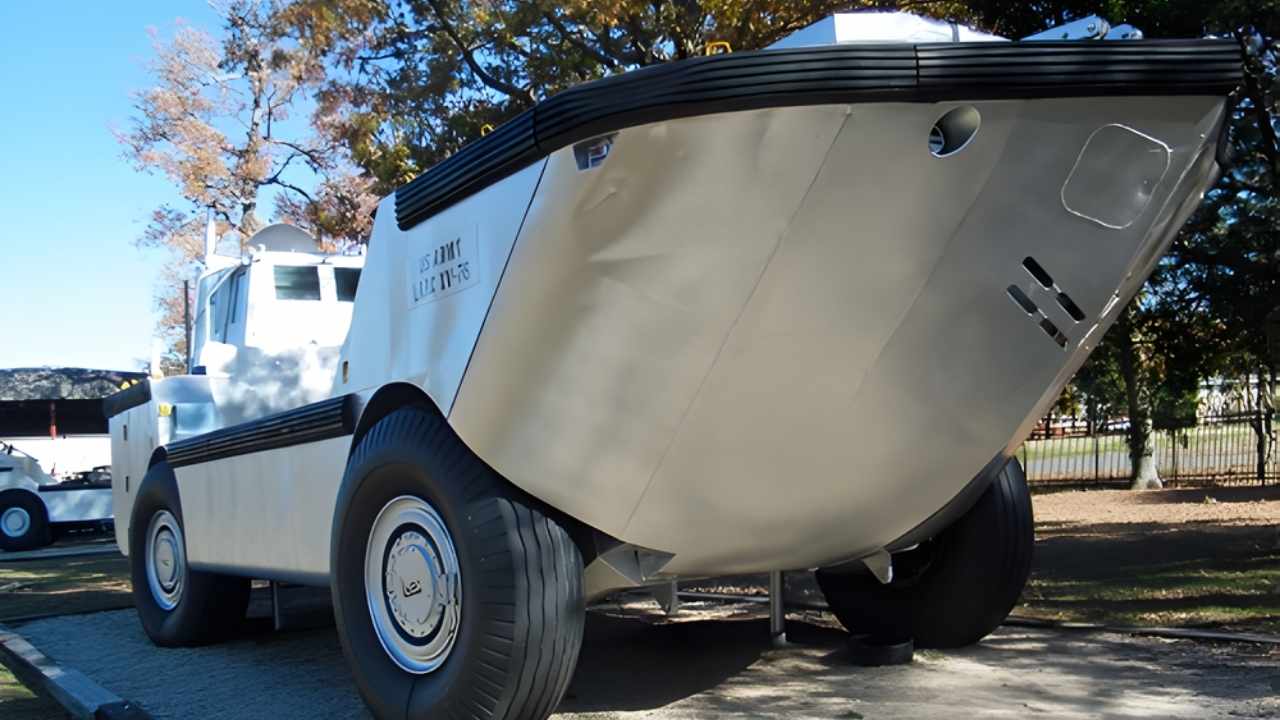
The LARC was an early military amphibious vehicle created to carry heavy loads from ships directly onto beaches, while today’s amphibious vehicles are modern machines design to move between water and land using newer ideas.
Modern amphibious vehicles look advanced and polished, but their basic goal is the same as the LARC’s, which is to avoid dependence on ports by operating freely where land and water meet.
Although they belong to very different time periods, both the LARC & modern amphibious vehicles were design to solve shoreline problems that traditional boats or trucks struggle with.
By comparing these vehicles together instead of separately, it becomes easier to see how old practical thinking and modern innovation approach the same challenge in different ways.
How LARC & Modern Amphibious Vehicles Approach Same Mission
The LARC and modern amphibious vehicles both exist to move supplies or people across water and land in one trip, but the LARC stays focused on delivery strength while modern vehicles aim for broader mission use.

Differences in Amphibious Movement
When shifting between water and land, the LARC moves slowly using weight and traction, while modern amphibious vehicles rely on refined hull designs and powered systems for smoother transitions.
Cargo Capacity & Practical Load Handling
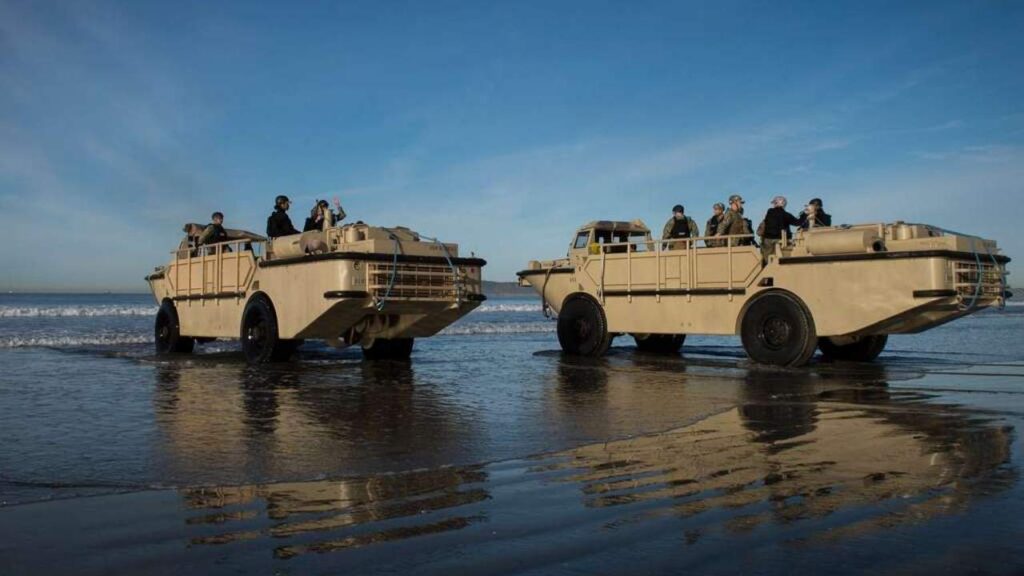
The LARC is designed to carry very heavy and bulky cargo in open space, while modern amphibious vehicles usually handle lighter, specialized loads arranged for different mission needs.
Cargo & Load Comparison
| Feature | LARC | Today’s Amphibious Vehicles |
|---|---|---|
| Load purpose | Heavy supply transport | Mixed mission cargo |
| Cargo layout | Open and wide | Modular or enclosed |
| Load handling | Simple and manual | Controlled and assisted |
Old Simplicity vs Modern Engineering
In design, the LARC uses a square, rugged shape focused on strength and access, while modern amphibious vehicles use smoother, angled forms built for efficiency and protection.
Design Comparison Points

- LARC favors strong structure over appearance.
- Modern vehicles balance shape, safety, and performance.
Speed & Maneuverability on Water and Land
Compared directly, the LARC travels at a steady but slow pace on land and water, while modern amphibious vehicles move faster and turn more easily in tight conditions.
Speed & Handling Comparison
| Speed & Handling | LARC | Today’s Amphibious Vehicles |
|---|---|---|
| Water travel | Slow and stable | Faster and smoother |
| Land movement | Heavy and deliberate | Quicker and responsive |
| Turning ability | Wide turns | Tighter control |
Operational Roles Then & Now
The LARC was mainly used to support supply operations during landings, while modern amphibious vehicles perform many roles such as transport, patrol, rescue, and logistical support.
Crew Size, Training, & Ease of Operation
Operating the LARC often requires a larger crew and physical coordination, while modern amphibious vehicles are designed for fewer operators with simpler controls and shorter training time.

Crew & Operation Comparison
- LARC depends on teamwork and hands-on control.
- Modern vehicles reduce workload through automation.
What LARC Still Does Better or Differently?
Even compared with newer machines, the LARC stands out for its mechanical toughness and straightforward operation, while modern vehicles rely on complex systems that demand careful upkeep.
Maintenance & Long-Term Practicality
Maintaining a LARC usually involves basic mechanical work and visual checks, while modern amphibious vehicles depend more on electronics, diagnostics, and specialized maintenance support.
Flexibility Versus Purpose-Built Strength
The LARC is built for one clear task and performs it consistently, while modern amphibious vehicles trade some raw strength to gain flexibility across different missions.

Handling Rough Shorelines & Terrain
On uneven beaches, the LARC pushes forward using weight and traction, while modern amphibious vehicles depend on suspension, balance, and design precision to manage rough ground.
Cost & Value Over Time
Modern amphibious vehicles cost more due to advanced technology, while the LARC reflects a simpler era where durability and function mattered more than speed or comfort.
Lessons From Comparing Old & New
Looking at both together shows that modern vehicles improve speed and adaptability, but the LARC proves that focused design and toughness can remain valuable for decades.
Modern amphibious vehicles clearly offer better control and flexibility, yet comparing them with the LARC reminds us that simple purpose, durability, and reliability still hold strong lessons today.