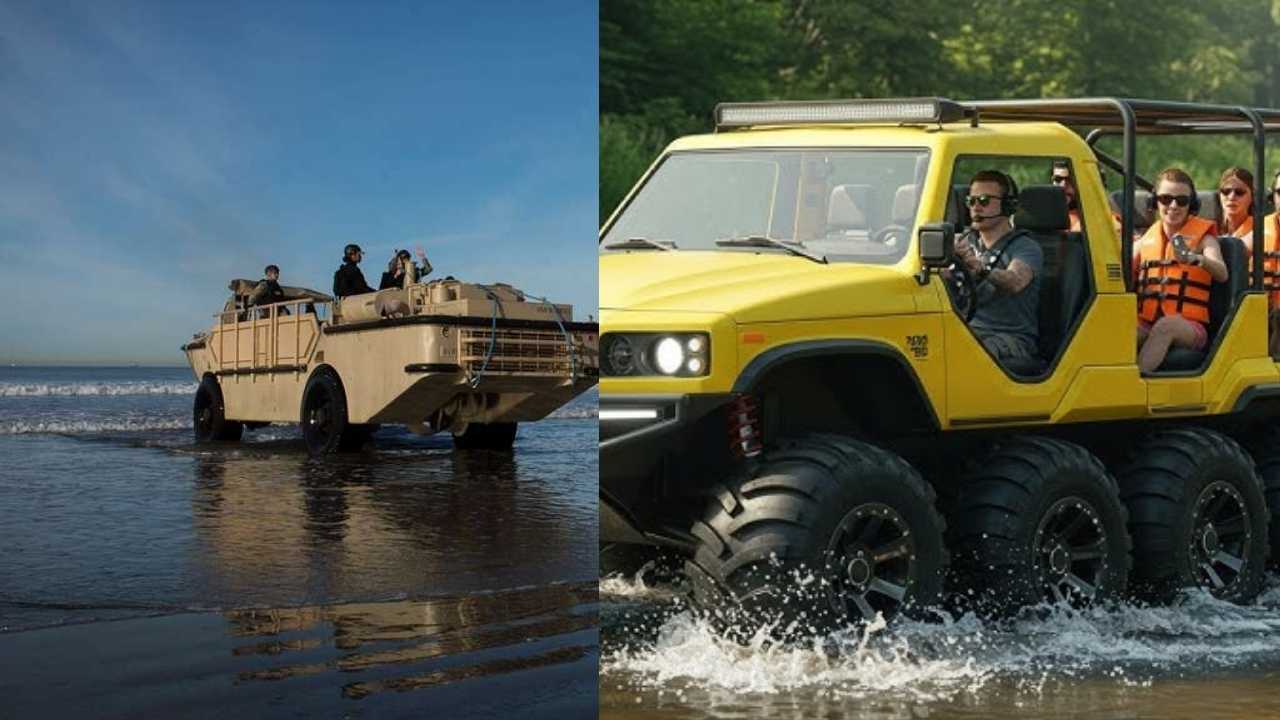
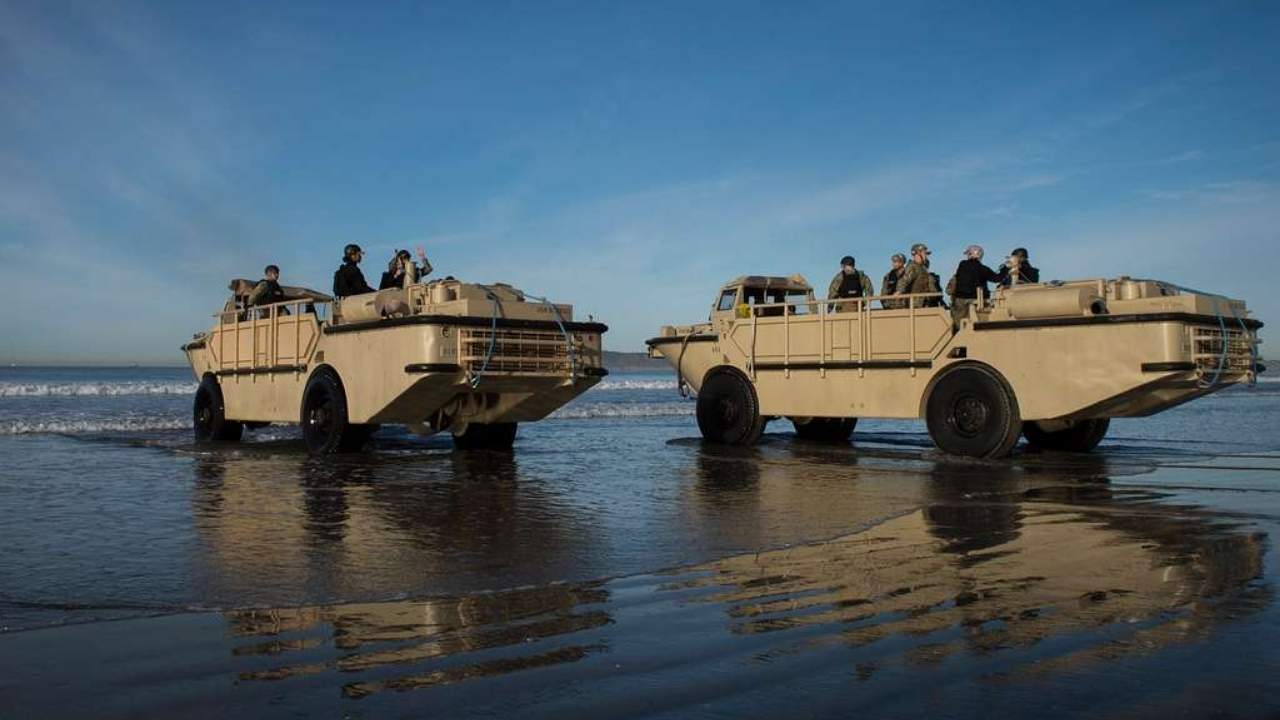
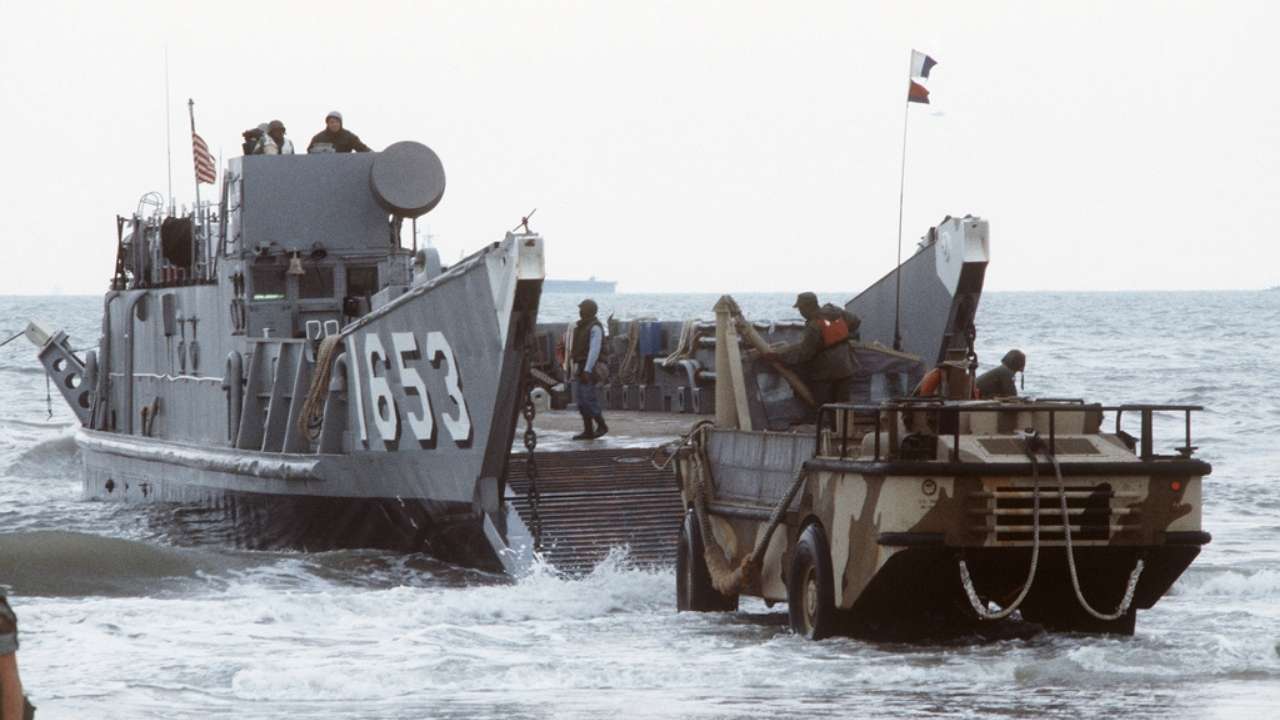
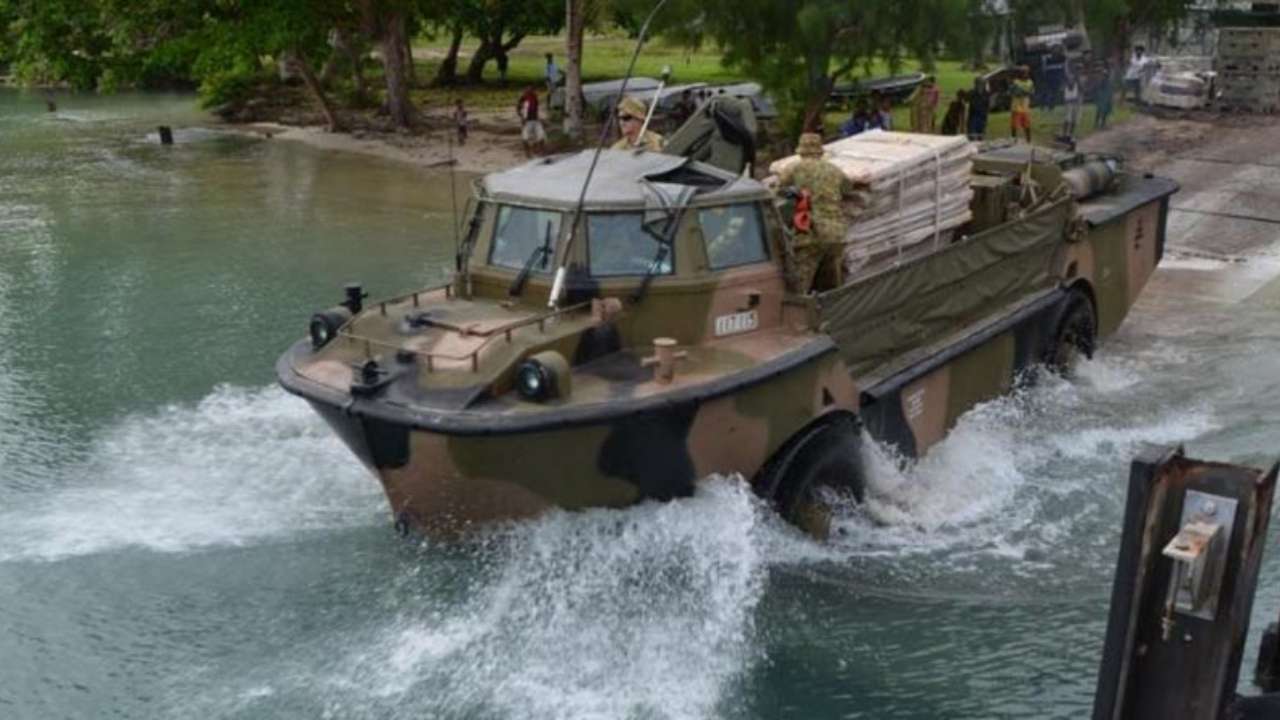
The LARC-LX was a massive vehicle use by the U.S. Army for special jobs. Unlike regular trucks or landing craft, it could carry very heavy loads straight from a ship to the shore. No dock or port was needed, which made it handy for difficult beach landings.
It looked unusual, almost like a floating metal box, but its size was intentional. Its job was to handle cargo that other vehicles could not move safely.
This vehicle played an important role in military operations where getting equipment ashore was tricky. It allowed the army to bring in tanks, trucks, or supplies in places where normal methods would fail.
Bringing Tanks Ashore: The LARC-LX Story
LARC-LX stands for Lighter Amphibious Resupply Cargo, 60-ton. Before that name, it was known as the BARC, meaning Barge Amphibious Resupply Cargo. The change in name did not change its job, only how it was classified.
The “LX” version was special because of its lifting power. While other amphibious vehicles handled light or medium loads, this one was built for truly heavy work.
In simple words, the LARC-LX was a floating cargo carrier with wheels. It could sail, drive, and crawl onto land while carrying loads that would stop most vehicles instantly.

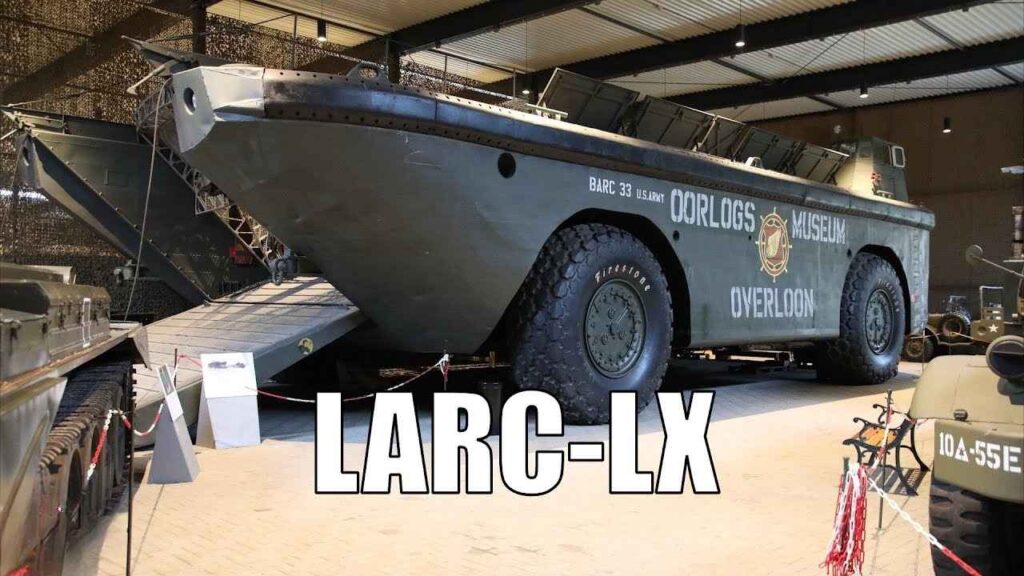
Need of the LARC-LX in Military
Military planners faced a big problem: moving heavy equipment to shore. Many beaches had no docks, and building one during combat could take too long or be too dangerous.
The issues included –
- Ships could not always reach close enough to land.
- Cranes needed steady ground to unload.
- Smaller landing vehicles could not carry tanks or big machines.
The LARC-LX solved these problems by combining water and land mobility. It allowed heavy cargo to reach land directly, even when the coast was rough or undeveloped.
LARC-LX’s Tough Build Explained Heavy Work
The LARC-LX was built to be tough, not stylish. Its steel hull made it strong enough to handle big weights and waves.
Key Features –

- Wide hull for stability in water.
- Big wheels to drive on sand or uneven land.
- Four diesel engines inside the hull.
- Two large propellers for moving in water.
Each engine powered one wheel on land. In water, pairs of engines drove the propellers. This meant it moved slowly but steadily, which was exactly what heavy transport needed.
LARC-LX Key Specifications
| Feature | Details | Explanation |
|---|---|---|
| Cargo capacity | 60 tons (can carry up to 100 tons) | Enough for tanks or large machinery |
| Land speed | About 14 mph loaded | Slow, steady, and controllable |
| Water speed | Around 7 mph loaded | Safe speed through waves |
| Crew size | 5 | Needed a small team to operate it |
| Engine type | Four GM 6-71 diesel engines | Each engine powers one wheel |
| Operational range | 150 miles land / 75 miles water | Could travel long distances without refueling |
The numbers show that speed was not important. Carrying weight safely was the priority.
Few Variants, Big Purpose
The LARC-LX did not have many different models. It was already built for a very specific purpose.
- BARC – The early version before 1960.
- LARC-LX – The main model used in service.
Because it was large, expensive, and specialized, no other versions were widely made.
The History of a LARC-LX
- Early 1950s – Concept and design work began.
- 1952 – First BARC tested in Washington.
- 1960 – Name changed to LARC-LX.
- 1967 to 1968 – Used in Vietnam for supply missions.
- 1970s to 1990s – Served in limited roles.
- 2001 – Officially retired from military service.
Only a small number were ever built because of cost and size.

Operational Use & Real-World Roles
The LARC-LX handled jobs that no other vehicle could. Some examples:
- Carrying tanks or armored vehicles
- Moving large construction or beach equipment
- Transporting shipping containers
- Working on beaches with shallow water or rough terrain
It excelled where roads, docks, or ports were missing or damaged.
Size, Expense, & Modern Logistics
The vehicle’s large size and cost made mass production difficult. Other reasons included:
- Complicated maintenance requirements.
- Hard to transport to different locations.
- Changes in military supply methods reduced the need for it.
As modern logistics improved, the army relied less on a single giant amphibious vehicle.
What Happened to the LARC-LX After Service
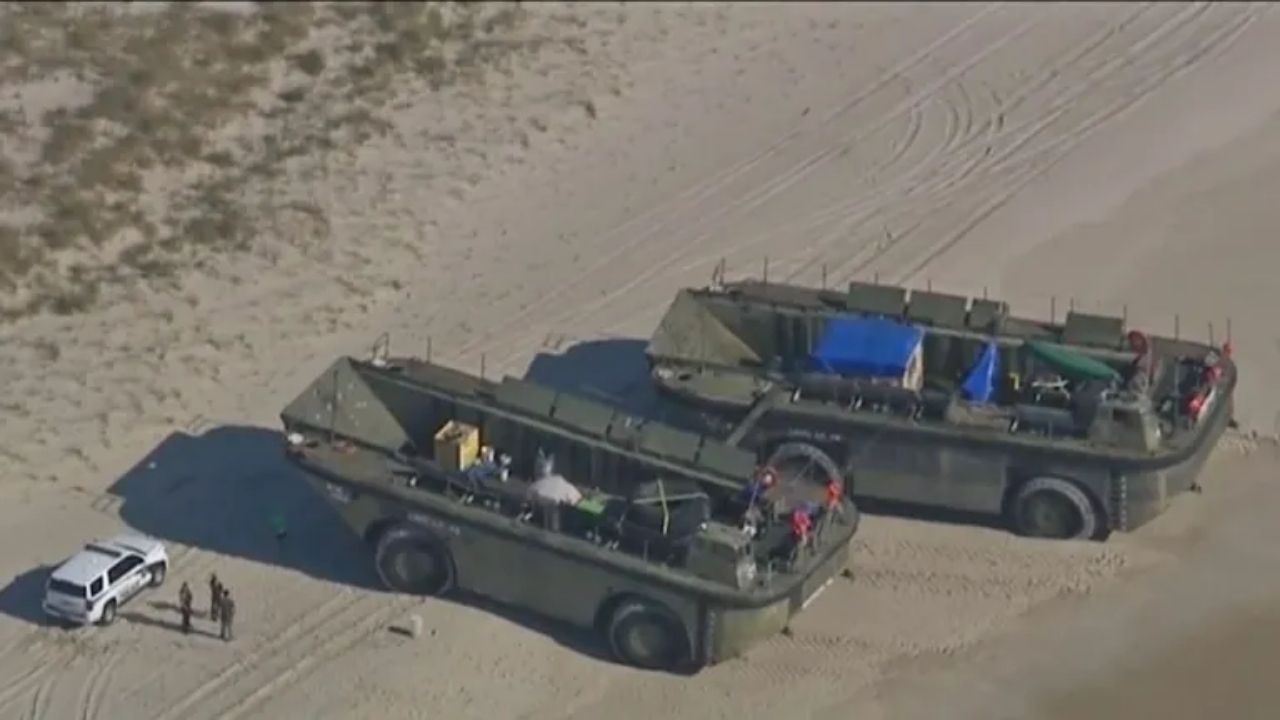
Most LARC-LX vehicles were scrapped after retirement. A few survived –

- Some are preserved in museums
- A very small number still operate in civilian roles like dredging
Keeping such a big machine running is expensive and requires special care, so only a handful remain.
Remembering the LX’s Power & Role
The LARC-LX stands out because it could carry massive cargo without ports or landing facilities. It showed what was possible when engineers focused on function over speed or style.
Even today, it is recognized as one of the largest amphibious cargo vehicles ever used by the U.S. Army. Its size and capability make it unusual, interesting, and memorable.