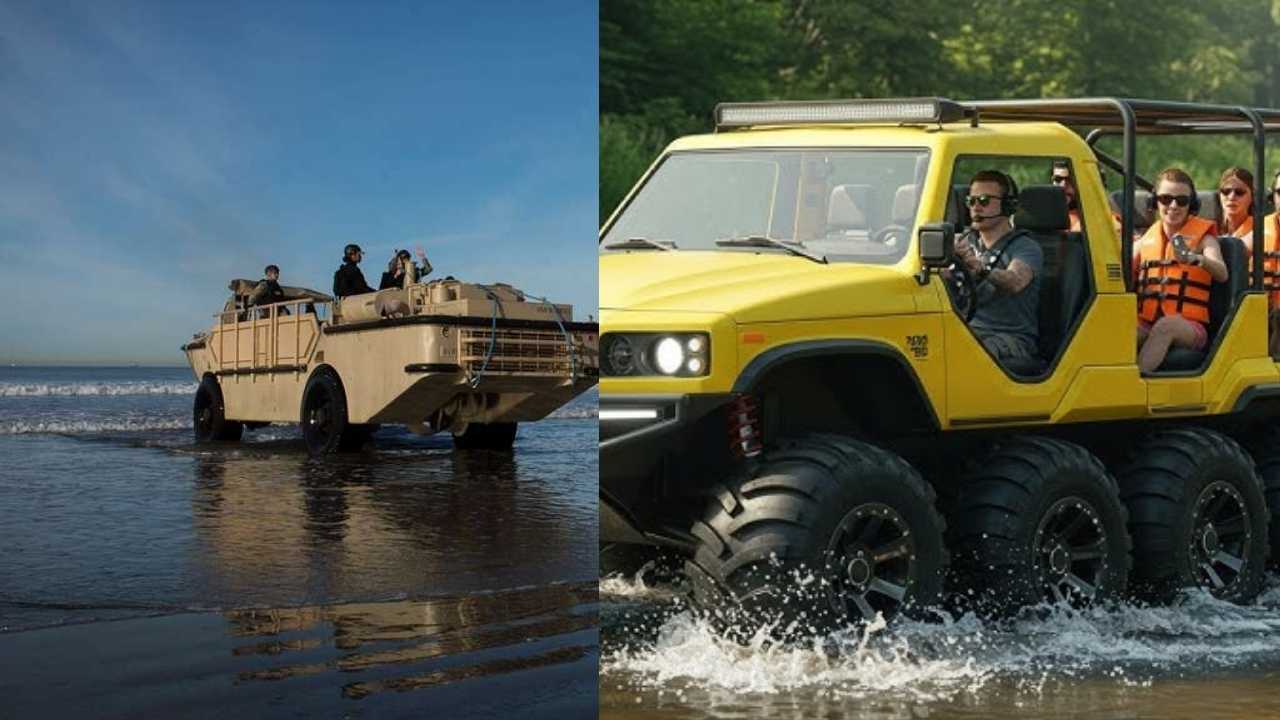
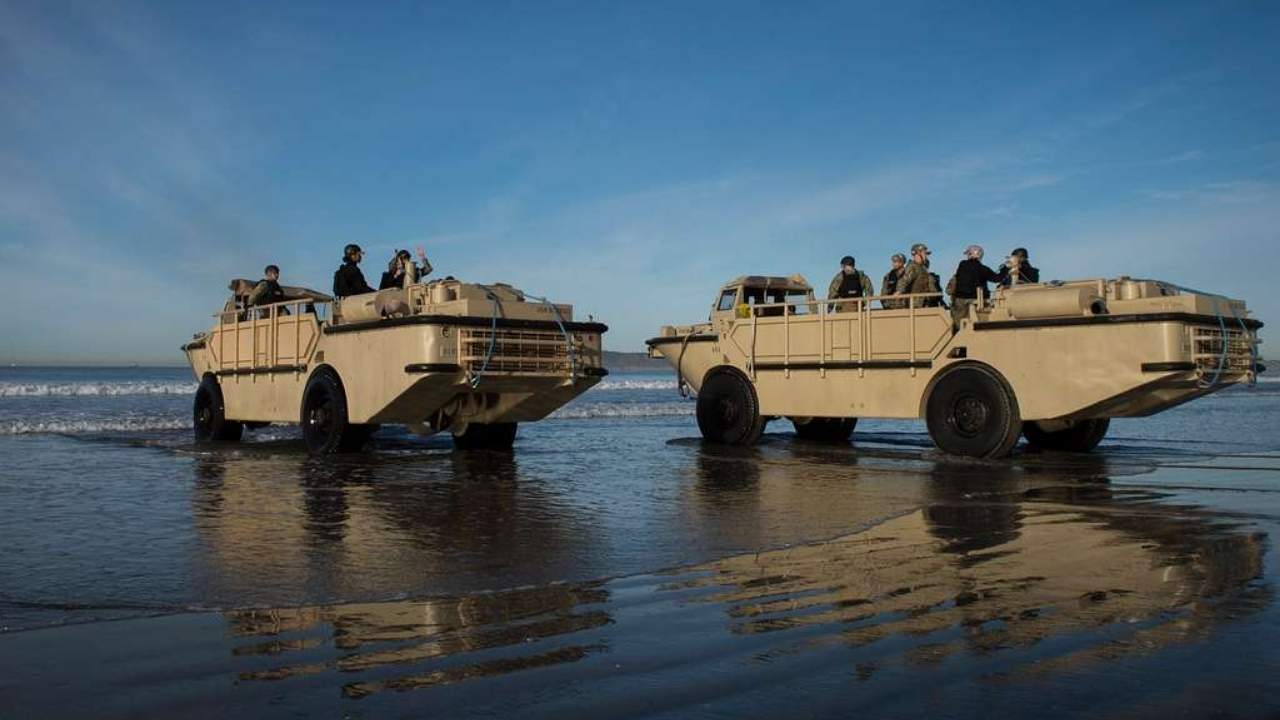
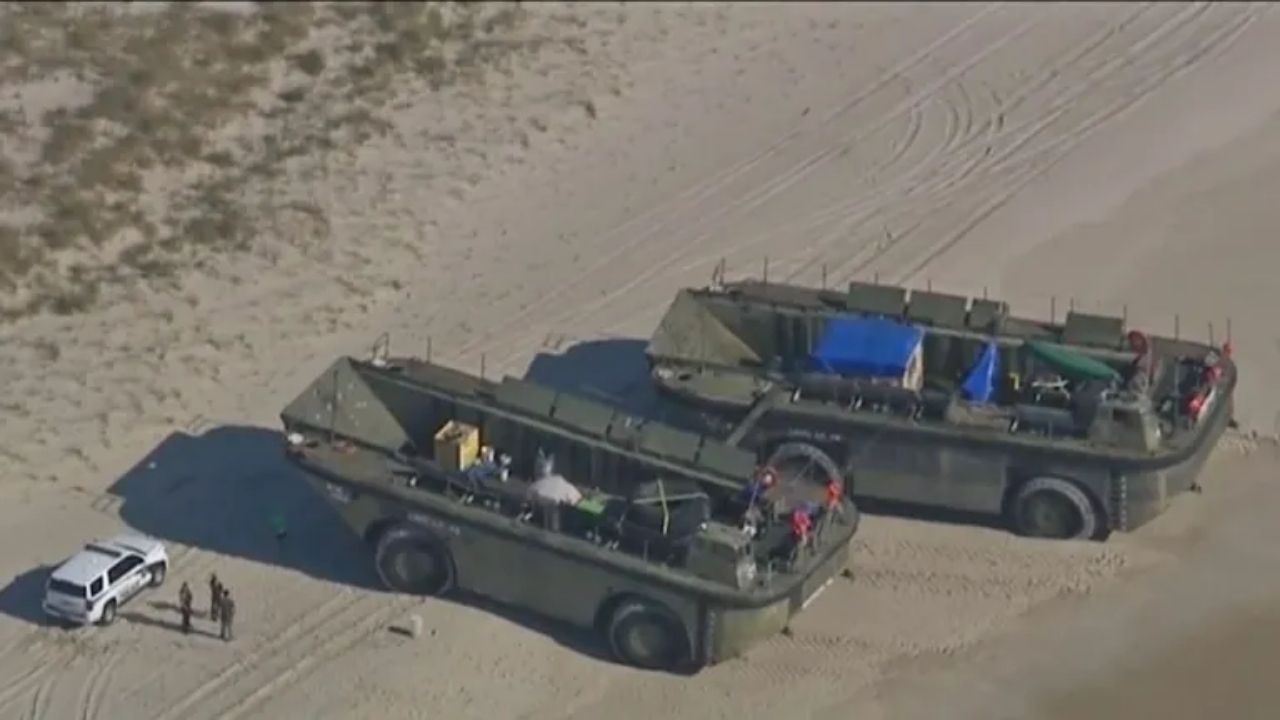
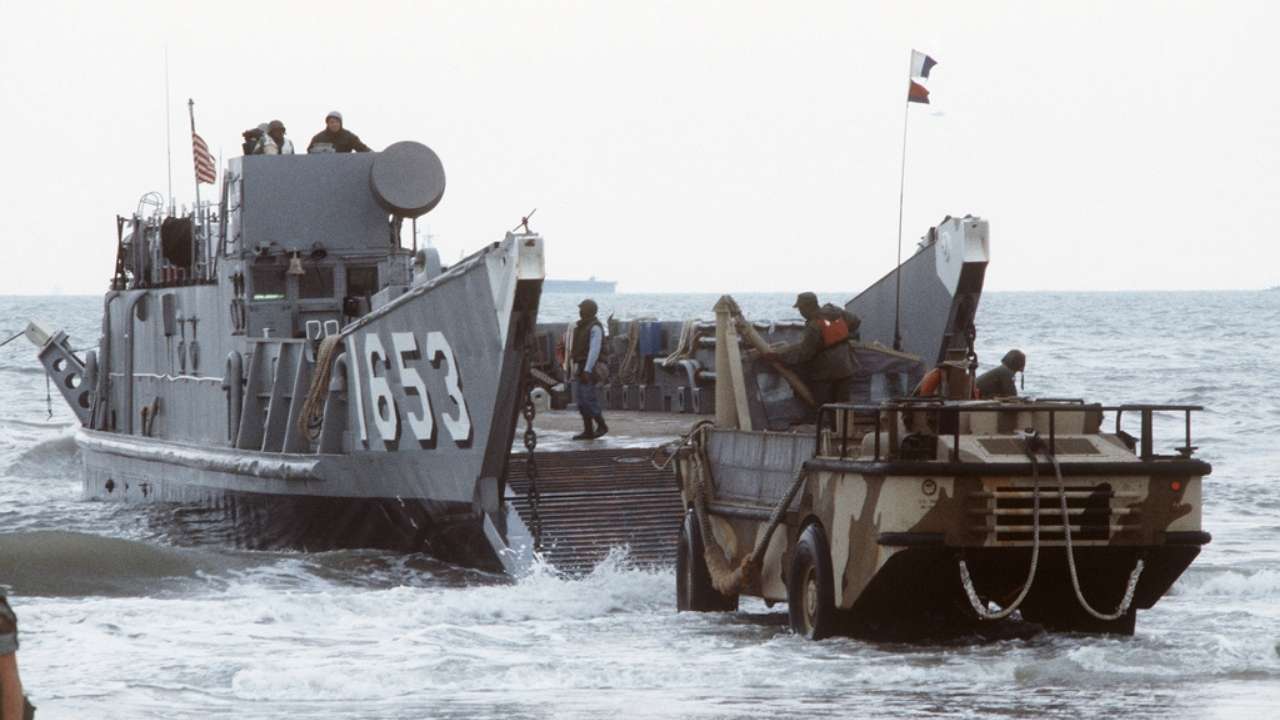
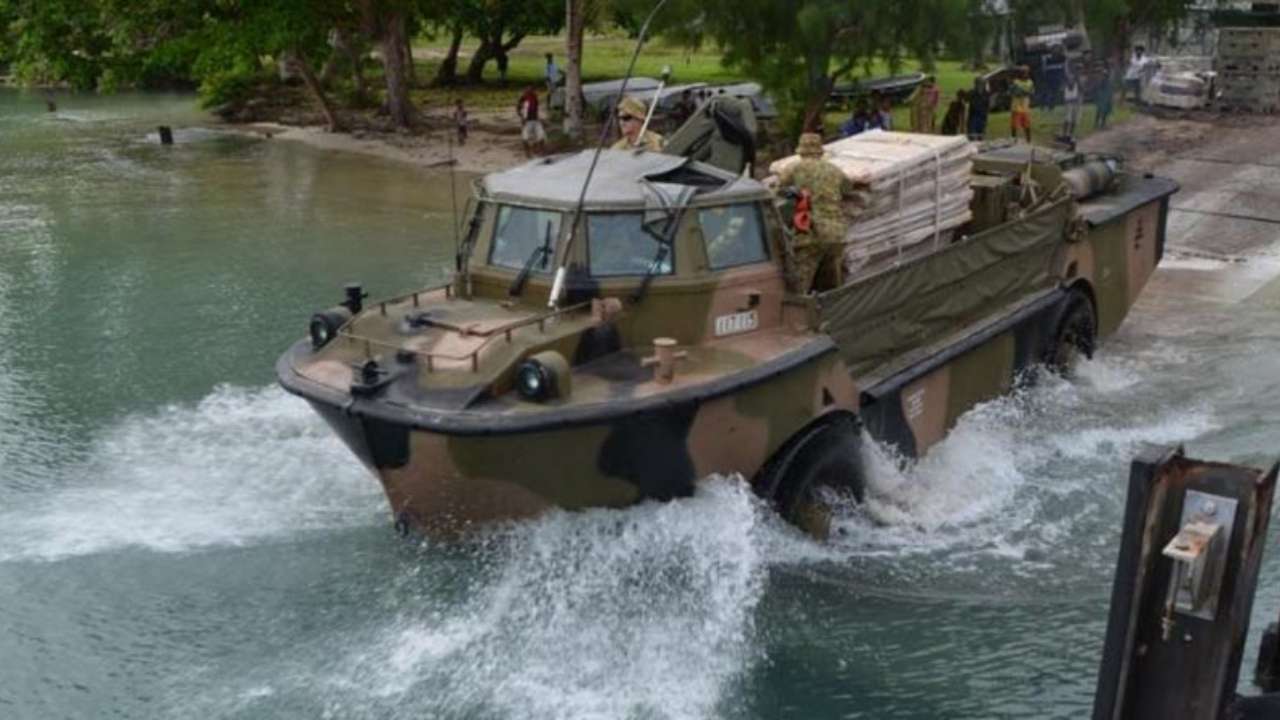
The LARC-V is a large amphibious cargo vehicle built to carry heavy loads from ships straight onto land. It can float like a boat, drive like a truck, and handle rough coastlines.
Well, the full name of LARC V is Lighter Amphibious Resupply Cargo Vehicle, 5-ton that explains its purpose clearly. The machine was design to move up to five tons without relying on ports.
The LARC-V never aimed to be fast or stylish. Its value came from doing difficult supply work in places where normal transport simply could not operate.
LARC-V: The 5-ton Machine Built For Sea & Sand
The LARC-V is an aluminum-hulled amphibious vehicle develop in the United States during the 1950s. It officially entered service in 1963 after several years of testing.
Unlike landing craft or standard trucks, the LARC-V combined both roles into one platform. It could leave a ship, cross water, climb onto shore, and continue inland. This made it ideal for support and resupply tasks rather than frontline fighting.

Design Choices That Favored Function Over Looks
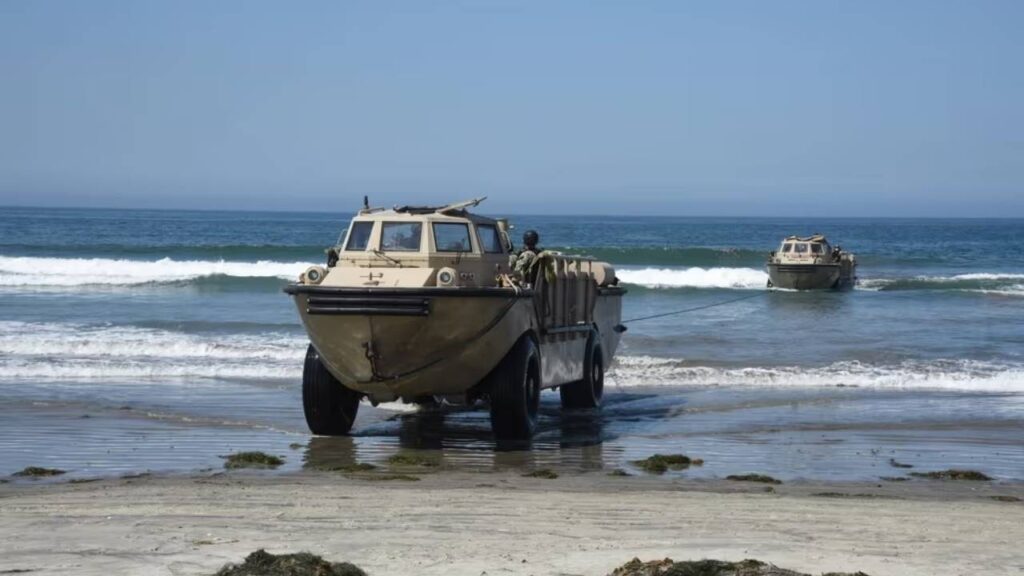
The LARC-V looks large and simple for a reason. Its wide, box-style body allowed easy loading and balanced weight during water travel. Important design elements are –
- Aluminum hull for strength and buoyancy.
- Oversized balloon tires for flotation and soft ground.
- High ground clearance for beaches and slopes.
- Simple layout for easier field repairs.
Nothing was added for style. Everything existed to survive tough working conditions.
LARC-V Specifications
Instead of heavy technical terms, here is a clear and simple breakdown of what the LARC-V could do.
| Feature | Value | Why It Was Useful |
|---|---|---|
| Payload | 5 tons (10,000 lbs) | Heavy cargo per trip |
| Land speed | Around 29 mph | Decent road movement |
| Water speed | About 7.2 knots | Stable sea crossing |
| Crew | 3 plus passengers | Flexible operations |
| Fuel capacity | About 144 gallons | Long working range |
These figures show a vehicle built for endurance, not speed.

Short History With Important Dates
The LARC-V was design in 1959 and entered production in 1963. Nearly 968 units were built during its production life. Key moments in its history are as follows –
- 1950s – Development phase in the U.S.
- 1963 – Entry into active service.
- 1965 to 1968 – Heavy use during the Vietnam War.
- 1982 – Used by Argentina in the Falklands conflict.
- 2006 – U.S. Navy began major upgrade programs.
Few vehicles stayed useful for so many decades.
Why Military Needed the LARC-V?
Many coastal areas had no proper ports, making unloading ships difficult. Traditional trucks could not reach ships, and boats could not drive inland, creating serious supply problems.
The LARC-V filled this gap by connecting sea and land movement. It allowed supplies to reach troops even when roads, harbors, or cranes were unavailable or damaged.

Famous & Notable Uses
The LARC-V became well known during the Vietnam War. U.S. Army transport units used it for nonstop beach supply operations.
- Vehicles and fuel
- Construction equipment
- Aircraft bombs from ships to airfields
Outside combat, LARC-Vs were also used in emergencies. During Australia’s Queensland floods in 2011, they helped move supplies in flooded areas.
Countries & Organizations That Used It
The LARC-V was not limited to American service. Several nations used it for military and support operations. Operators includes –
- United States
- Australia
- Argentina
- Portugal
- Philippines
- Singapore
- Iceland
Some versions later entered civilian service, especially in tourism.

What Happened After Military Service?
During the U.S. withdrawal from Vietnam, nearly 500 LARC-Vs were destroyed, many deliberately sunk. About 200 stayed in U.S. service afterward.
Roughly 100 vehicles were sold to private owners. Many of these are still running today as amphibious tour vehicles. Others were preserved in museums as rare working examples.
Why the LARC-V Still Gets Attention?
The LARC-V is remembered because it handled a very specific job extremely well. It worked where ports failed and roads ended. Its long service life proves that simple, well-planned designs can outlast newer technology.
The LARC-V was never glamorous, but it was dependable. Built to carry five tons across land and water, it remains a strong reminder that practical ideas often matter the most.